Most people plan a Nepal trip around a summit, a lake, or a sunrise viewpoint. Almost nobody plans it around a plate of food, and that is Nepal's best-kept secret. Cross a single valley here and the food changes: a Newari farmer in Bhaktapur eats a completely different meal than a Thakali trader in Mustang or a Sherpa herder above Namche, even though all three are Nepali and all three are eating well. Gastronomic tourism in Nepal means treating that diversity as a destination in itself, not a side effect of trekking or sightseeing.
This guide is built for travelers who want to eat their way through Nepal deliberately: the dishes worth seeking out, the regional cuisines that rarely make it onto a hotel buffet, and how to turn a trip into a genuine culinary tour with Getaway Nepal Adventure rather than a string of random meals between attractions.
What Gastronomic Tourism Actually Means in Nepal
Dal Bhat: The Meal That Explains the Country
Newari Cuisine: 200 Dishes in the Kathmandu Valley
Thakali Cuisine: High-Altitude Cooking from Mustang
Regional and Festival Foods Worth Timing Your Trip Around
How to Actually Experience It: Classes, Markets, Homestays
Gastronomic tourism is travel built around a place's food and drink, not just fitting meals around the day's itinerary. It means eating in markets, farmhouses and family kitchens rather than only in hotel restaurants, and understanding why a dish is cooked the way it is before you eat it. Nepal is genuinely well suited to this kind of travel because its cuisine is not one national menu but dozens of regional ones, shaped by ethnicity, altitude and religion.
A Newar family in the Kathmandu Valley, a Thakali household along the old salt-trading route near Mustang, and a Sherpa family above 3,000 metres in the Khumbu are all Nepali, and all three cook completely differently. That's the raw material of a food destination, and it's largely untapped: most visitors still eat the same handful of tourist-menu staples without ever learning what a real Newari feast or a Thakali set looks like. This guide exists to close that gap.
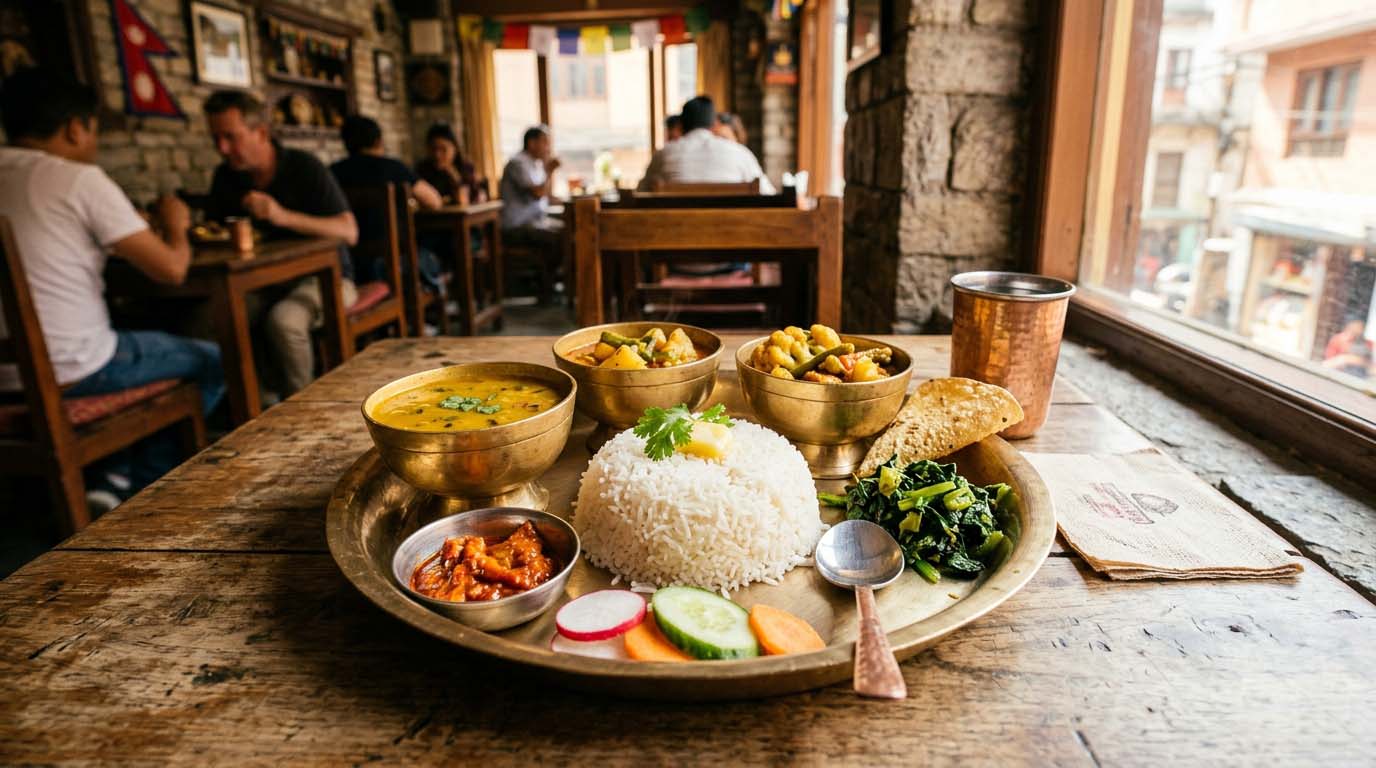
Dal bhat is Nepal's everyday meal, eaten by most families twice a day: steamed rice (bhat), a lentil soup (dal), a seasonal vegetable curry (tarkari), and a pickle (achar), usually served on a steel thali. It's simple by design, built for people who farm, herd, or trek for a living and need steady energy rather than heavy, rich food. Ask for a refill in a Nepali home or teahouse and it's expected, not an imposition - dal bhat is traditionally served until you're full.
What changes is everything around that core structure. In the Terai lowlands near the Indian border, dal bhat leans spicier and often includes fish. In the hills, expect gundruk, a fermented, sun-dried leafy green with a distinctive sour tang, alongside the curry. In the high mountains, dhido - a thick porridge made from millet, buckwheat or corn flour - frequently replaces rice as the staple starch, since rice doesn't grow well at altitude. Trying dal bhat in two or three different regions on the same trip is one of the simplest ways to actually taste Nepal's geography.
Newari food, from the Newar community native to the Kathmandu Valley, is widely considered Nepal's most sophisticated regional cuisine, with well over a hundred distinct dishes built around fermentation, buffalo meat, beaten rice, and precise spicing. The centerpiece is samay baji: a ceremonial platter of chiura (beaten rice), choila (marinated, smoked or grilled meat), bhatmas (fried soybeans), boiled egg, aloo tama (a bamboo shoot and potato curry), and pickles, traditionally shared during festivals and family gatherings but now available daily in Kathmandu, Patan and Bhaktapur.
Beyond samay baji, look for chatamari, sometimes called Newari pizza - a savory rice-flour crepe topped with minced meat, egg or vegetables - and yomari, a steamed rice-flour dumpling filled with molasses or chaka (jaggery), which has its own dedicated festival, Yomari Punhi, in December. Pair any of it with juju dhau, the thick, custard-like "king curd" made in clay pots in Bhaktapur, still considered one of the best yogurts in South Asia. A hands-on Nepali cooking class in Kathmandu is the fastest way to understand how these flavors are actually built, rather than just tasting the finished plate.
Thakali cuisine comes from the Thakali people of the Kali Gandaki valley around Mustang and the Annapurna region, historically traders along the old salt route between Tibet and India. A Thakali set is dal bhat's richer, more elaborate cousin: usually served on a large bronze or steel plate with several lentil varieties, a meat curry, seasonal greens, gundruk, spiced potatoes, pickles and ghee, built to fuel people working and travelling at altitude.
Two ingredients mark Thakali food as distinct: jimbu, a dried Himalayan herb related to chives with a flavor somewhere between onion and thyme, and buckwheat, used for everything from dhido to crisp fried snacks. Thakali restaurants have become common across Kathmandu and Pokhara, but the more memorable version is still a home-cooked set in a Thakali-run guesthouse along the Annapurna trekking routes, where the same recipes have fed traders and travelers for generations.
Momo - steamed or pan-fried dumplings filled with meat or vegetables and served with a spicy tomato-sesame achar - is Nepal's most recognizable street food, believed to have arrived with Newari traders travelling to and from Tibet, and now cooked slightly differently in almost every neighbourhood. Sel roti, a sweet, ring-shaped rice-flour doughnut, is everyday street food but becomes essential during Dashain and Tihar, Nepal's two biggest festivals, typically falling between September and November. Dashain also brings goat curry to most tables, while Tihar adds an array of Newari sweets on top of the sel roti.
In the high Himalaya, teahouses along the Everest and Langtang trekking routes serve Sherpa stew (a hearty noodle and vegetable soup) and Tibetan bread, adapted over generations to the demands of cold, thin air and limited fresh produce. And in the eastern hills and Terai, look out for kinema, a fermented soybean dish with a strong, distinctive flavor that rarely appears on tourist menus but has a loyal following among food travelers willing to seek it out. If you're curious about traditional drinks, ask for tongba (warm, fermented millet beer sipped through a bamboo straw), chhyang or raksi, all rooted in specific ethnic communities rather than mass-produced.
Eating well in Nepal is easy. Understanding what you're eating takes a bit more structure, and that's where a few specific experiences make a real difference. A Nepali cooking class focused on momo and dal bhat, usually 3 to 4 hours including a local market visit, teaches you to select ingredients and cook the two dishes that anchor daily Nepali eating - and you walk away able to actually make them at home. Pair it with a walk through a Kathmandu Valley food market, where spice sellers, curd vendors and fresh produce stalls tell you more about regional eating habits than any menu can.
Community homestays go a step further. Since Nepal's rural homestay movement began in Sirubari village in the late 1990s, dozens of villages across the country have opened their kitchens to travellers, serving the same seasonal, home-grown food the family eats - not a version simplified for tourists. Combining a homestay night with a farm visit, where you see vegetables harvested before they're cooked, is as close as most travellers get to a genuine farm-to-table experience in the Himalaya.
Stick to busy, high-turnover restaurants and homestays, drink bottled or filtered water, and go easy on raw salads and unpeeled fruit from street stalls in your first few days while your system adjusts. Freshly cooked, hot food - dal bhat, momo, thukpa - from reputable kitchens is low risk and is what most travellers eat daily without any issue.
Vegetarians eat easily in Nepal: a fully vegetarian dal bhat is the everyday default in most homes and teahouses, not a special request. Vegans should ask specifically about ghee, milk-based curd, and paneer, which show up often but can usually be swapped out with notice, especially at cooking classes and homestays where the menu is flexible. For timing, October-November and March-April bring the clearest weather for combining food experiences with sightseeing and trekking, while the Dashain, Tihar and Yomari Punhi festival season from late September through December adds dishes and rituals you simply won't see the rest of the year.
Food tourism works best woven into a wider itinerary rather than treated as a single afternoon. Pair a Kathmandu cooking class with an exploration of Kathmandu Valley's temples and old-city courtyards, add a day trip to Bhaktapur for juju dhau straight from the clay pot, and if your trip includes the Annapurna foothills, build in at least one night in a Thakali-run guesthouse for a home-cooked set. Heading to Pokhara? Its lakeside food scene and nearby villages make an easy second stop for a hands-on cooking session away from the capital.
What is gastronomic tourism, and does Nepal really offer it?
Gastronomic tourism means travelling specifically to experience a place through its food, not just eating while you happen to be there. Nepal qualifies because its cuisine changes dramatically by ethnicity, altitude and region: Newari feasts in the Kathmandu Valley, Thakali sets in the Annapurna foothills, and Sherpa food in the high Himalaya are genuinely different culinary traditions within one small country.
Is Nepali food safe for tourists to eat?
Yes, with normal travel precautions. Eat at busy restaurants and homestays with high turnover, stick to bottled or filtered water, and be cautious with raw salads and unpeeled fruit from street stalls in your first few days. Freshly cooked, hot dal bhat and momo from reputable kitchens are low risk and are what most travelers eat daily without issue.
Can vegetarians and vegans eat well in Nepal?
Very well. Dal bhat is naturally built around lentils, rice and seasonal vegetables, and a fully vegetarian version is the default in most Nepali homes and teahouses. Vegans should ask for dishes without ghee, milk-based curd (dahi), or paneer, which is easy to arrange in advance at cooking classes and homestays.
What is the best time of year for a Nepal food trip?
October to November and March to April offer the best weather for combining food experiences with sightseeing. But food tourism itself works year-round, and the Dashain and Tihar festival season (September-November) and Yomari Punhi in December add dishes and rituals you will not see at other times of year.
Tell us your travel dates, group size and what you want to eat. We'll build a gastronomic itinerary around cooking classes, homestays and regional cuisine across your Nepal trip.

Getaway Nepal Adventure (P.) Ltd.
Thamel Kathmandu, Nepal
Tel: +977 98510 38 908





 TripAdvisor