Most travellers see the same version of the Kathmandu Valley: Durbar Square from the outside, a Thangka shop window in Thamel, a potter's wheel spinning behind a rope in Bhaktapur. You watch, you photograph, you buy the finished souvenir on your way out. That is sightseeing. It is not the same as sitting down at the forge, the wheel, or the easel and doing the work yourself, under the hand of someone whose family has done it for generations.
The Kathmandu Valley has one of the densest concentrations of living craft traditions anywhere in Asia - Newari metalwork, stone carving, pottery, Thangka painting, papermaking, incense rolling - all still practiced daily, in workshops you can walk into. In the last few years, a genuine hands-on experience economy has grown up around this: small workshops in Thamel, Patan, and Bhaktapur now welcome travellers for a few hours, hand them the tools, and let them make something real.
We researched what's actually on offer across Kathmandu, Patan, and Bhaktapur right now - durations, prices, what's included, and where each craft is best experienced - and built this guide around ten of the best. Some take twenty minutes and cost less than a coffee. Others run half a day and end with a knife or a painting you made yourself. All of them get you off the sightseeing track and into a workshop.
1. Khukuri Making: Forge Your Own Gurkha Knife
2. Pottery Making in Bhaktapur
3. Thangka Painting Workshop in Kathmandu
4. Nepali Cooking Class: Momos, Dal Bhat and More
5. Hidden Courtyards of Kathmandu Walking Tour
6. Singing Bowl Making and Sound Healing
7. Handmade Lokta Paper Making
8. Rickshaw Ride Through Old Kathmandu
9. Stone Carving Experience in Patan
10. Handmade Incense Making Workshop
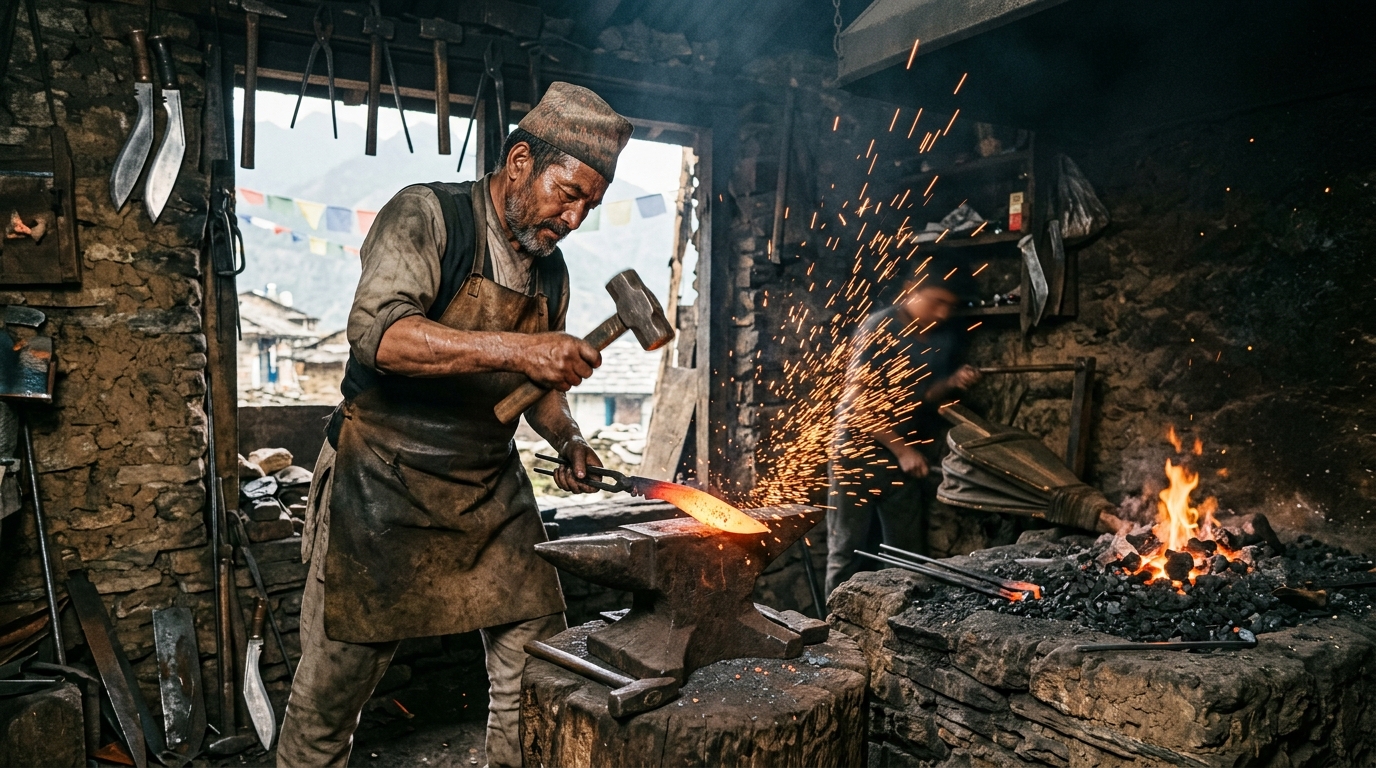
The khukuri is the curved blade carried by every Gurkha soldier and most hill-tribe households in Nepal - part tool, part weapon, part national symbol. The notch near the handle base is said to represent the Hindu trinity of Brahma, Vishnu and Shiva. You will see khukuris in every souvenir shop in Thamel. Almost none of them were forged by the person selling them.
The real version happens in a working forge, usually a small family operation where the blacksmith has been hammering steel for decades, sometimes with a son or apprentice working the bellows beside him. You take part in the parts of the process a beginner can safely handle - hammering the heated blank, grinding the edge, shaping and polishing - while the blacksmith handles the technical steps that require real skill, like tempering and final sharpening. Sessions run 4 to 5 hours, groups are kept small (most operators cap at 4-5 people so everyone actually gets hands-on time), and you leave with a knife you helped make, usually in a handcrafted wood-and-leather scabbard.
Pricing across Kathmandu operators sits around $65-90 per person, and the better-reviewed workshops include tea and snacks, a short history and symbolism briefing before you start, and hotel pickup. A few also throw in lunch. What separates a good workshop from a rushed one is time with the blacksmith himself rather than an assistant, and a small group size - ask before booking.
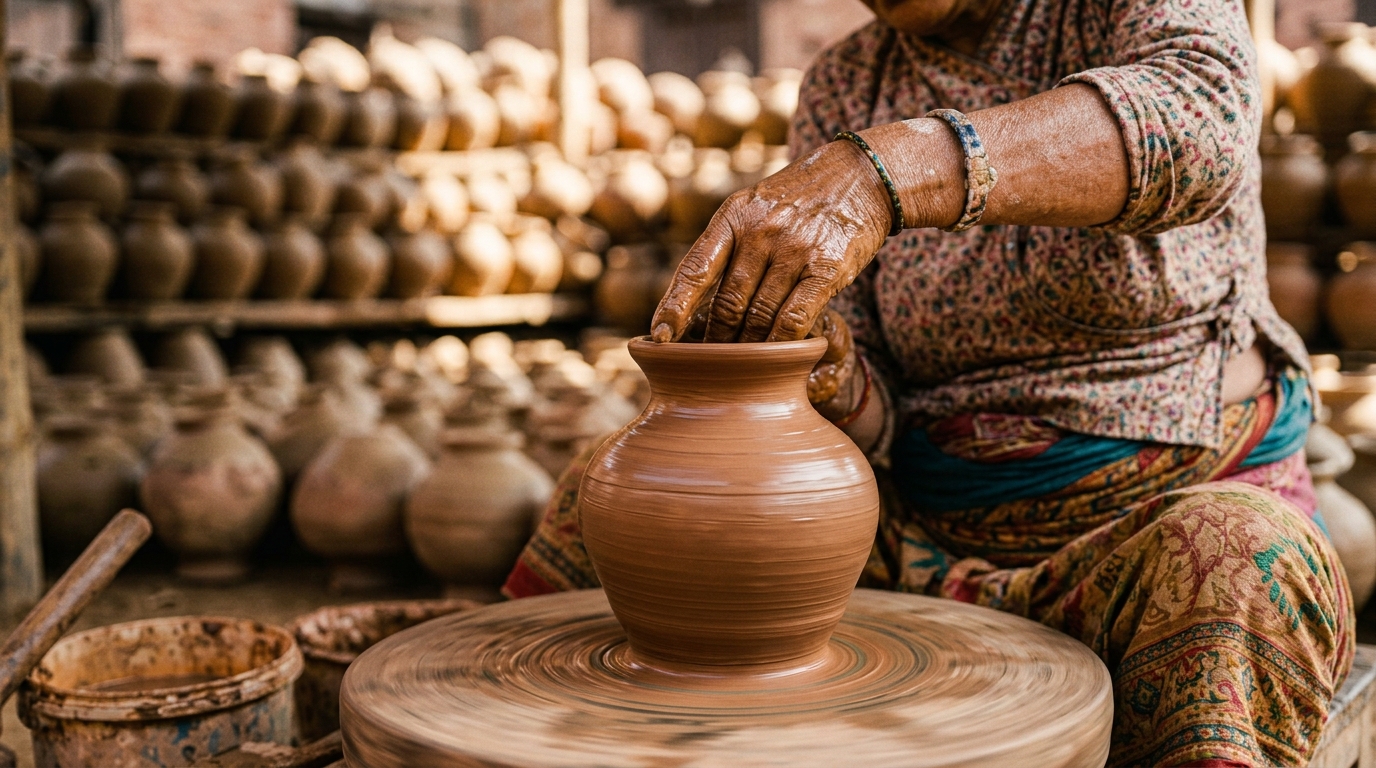
Pottery Square in Bhaktapur (locally called Bolachhen Tol) is one of the few places in the world where an entire neighbourhood still makes its living the way it has for centuries: digging clay, throwing it on heavy wooden wheels spun by hand with a bamboo stick, and laying hundreds of finished pieces out in the sun to dry before firing. You do not need to book anything in advance to see it - it happens in the open square, all day, every day.
There are two ways to actually get your hands on the clay. The casual version costs next to nothing: sit down with a potter for five to ten minutes and shape a simple cup, mug or small pot for around NPR 100-150 (roughly $1-1.50). It is quick, informal, and exactly the kind of spontaneous local interaction that makes Bhaktapur worth a full day rather than a rushed morning stop. The structured version is a proper lesson - typically an hour with a potter, NPR 1,200-2,800 depending on whether you want your piece fired and prepared for travel - or a half-day package (roughly $40-70) that bundles the pottery lesson with a guided walk through Bhaktapur Durbar Square.
Note that entry to Bhaktapur's heritage core (Durbar Square, Pottery Square, Taumadhi and Dattatreya) requires a foreigner ticket, currently around NPR 1,500-1,800 (about $15). Pottery Square itself has no separate charge once you're inside the city.
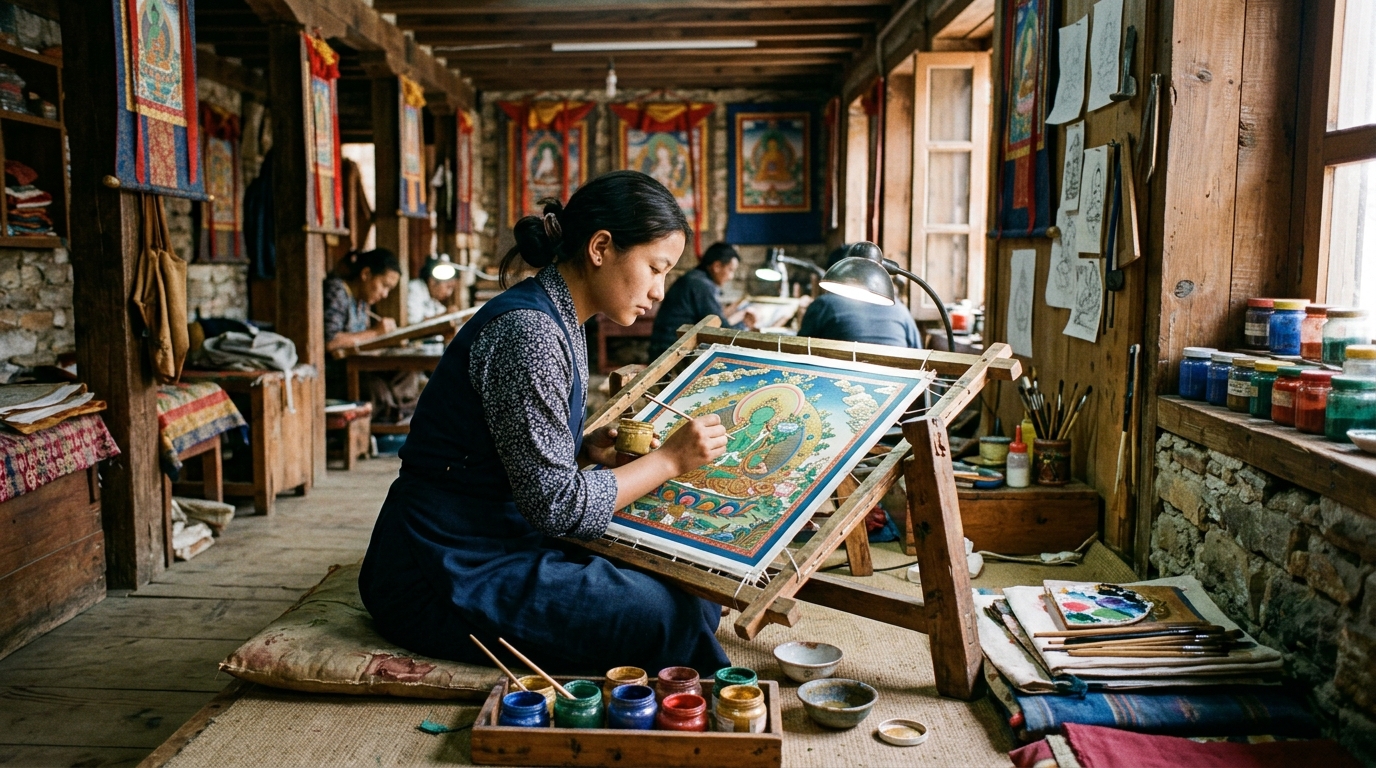
A Thangka is a Tibetan Buddhist scroll painting - deities, mandalas, symbolic geometry - traditionally used for meditation and teaching rather than decoration. Full mastery takes years; master artists apprentice for over a decade before painting independently. What a workshop gives you is not mastery, but a genuine introduction: real natural pigments, a real brush, and a master artist correcting your linework in real time.
Workshops typically run 4 to 5 hours in a working studio - you'll often see other students and working artists mid-piece around you, which is part of the value; this is a functioning school, not a demo staged for visitors. Most sessions walk you through sketching a small mandala or simple deity outline and painting it under direct guidance, with the instructor explaining the symbolism behind each element as you go. Pricing across Kathmandu is consistently around $70-75 per person, including hotel pickup and all materials. Thangka schools also operate in Patan and at Changunarayan above Bhaktapur, some offering multi-day or multi-week immersion for travellers who want to go deeper than an afternoon allows.
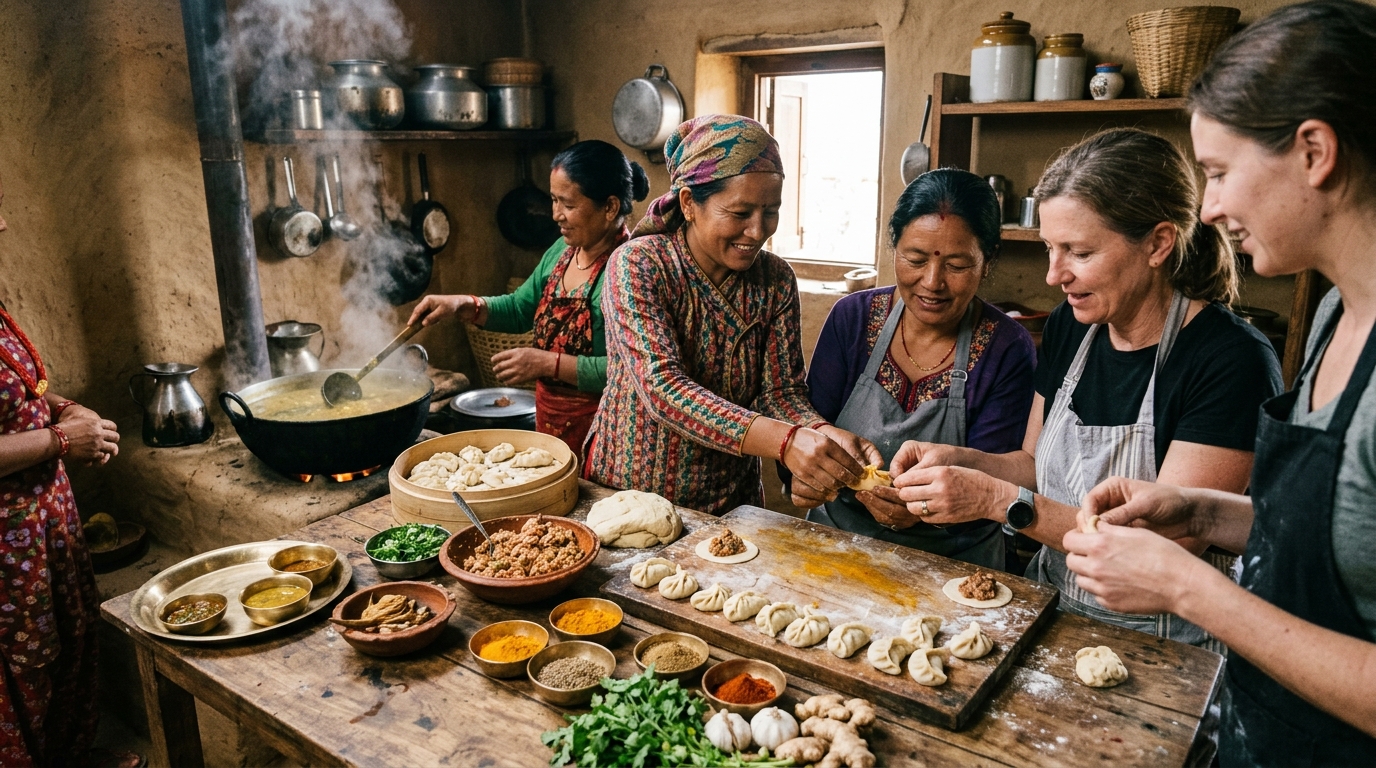
Nepali cooking classes are the easiest of these ten experiences to slot into any itinerary - they run daily in Thamel, need no advance planning, and work for solo travellers as well as groups. The format is fairly consistent across operators: a short local market visit to see the raw ingredients, then hands-on preparation of momo (Nepal's dumpling, adopted from Tibetan trading routes and now the national street food), dal bhat (the everyday rice, lentil and vegetable set), and often a third dish - thukpa noodle soup, bara lentil patties, or yomari, the jaggery-and-sesame sweet dumpling traditionally made for the Newari festival of the same name.
Sessions run 2 to 5 hours depending on how many dishes are covered, and end with everyone sitting down to eat what they made. Pricing varies more here than in any other category on this list - from around $5 for small women-led home classes to $50-60 for larger commercial operators with bigger kitchens and more elaborate menus. The lower price point is not a lower-quality experience; several of the most highly-rated classes in Kathmandu are the smaller, women-run kitchens, where the informality and direct contact with the cook is the whole point.
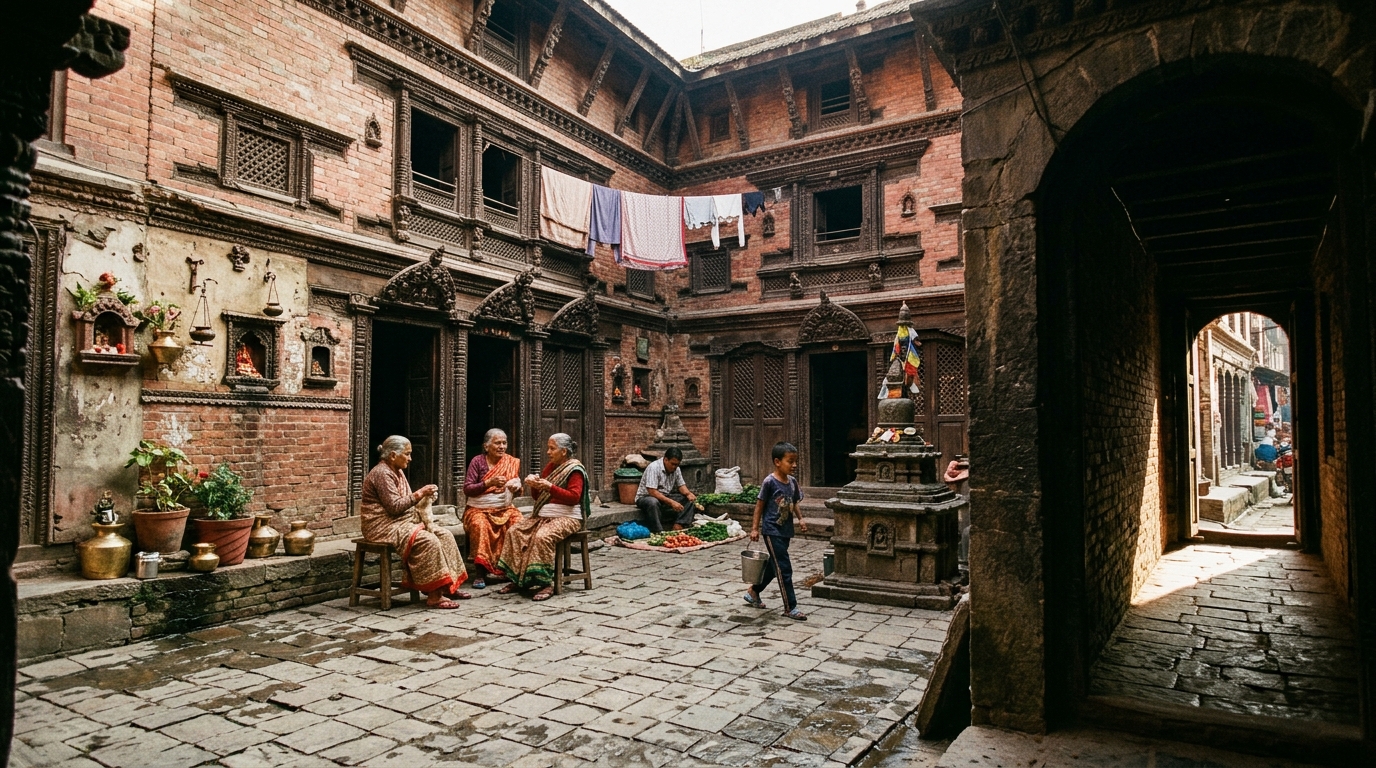
Kathmandu's old city is built around bahals and bahils - Newari Buddhist courtyard complexes, usually entered through a low, easy-to-miss doorway off a busy street. Step through one and the noise of the market disappears: you're standing in a quiet square lined with stupas, prayer wheels, carved windows, and often laundry drying between them, because these courtyards are still lived in. Itum Bahal, the largest in the city, and smaller ones like Yetkha Bahal, Takse Baha and Musya Bahal, sit within a few minutes' walk of Thamel and Durbar Square but are missed by the vast majority of visitors who stay on the main routes.
The best way to see them is on foot, ideally early morning or on a Saturday when the old city's narrow lanes are quieter and locals are going about ordinary business rather than negotiating tourist traffic. A guided version typically links Thahiti Stupa, Ason Bazaar (Kathmandu's oldest and busiest market), Indra Chowk, and a handful of courtyards before finishing at Durbar Square - 2.5 to 3 hours on foot, often available as a free or donation-based walking tour, or as a paid guided route (roughly $15-50) that adds refreshment stops and deeper historical context. It is also entirely possible to do this self-guided with a map, since none of the courtyards charge entry.
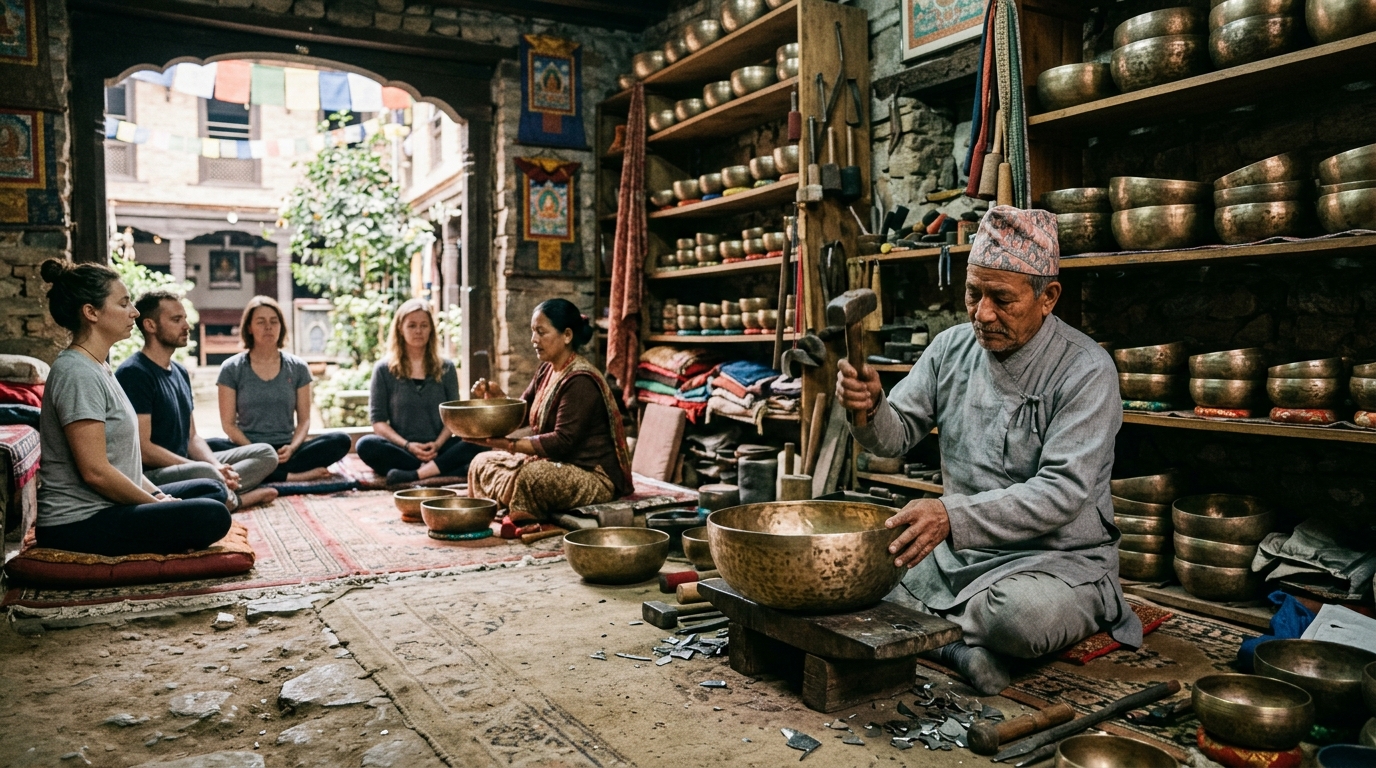
Patan has been the Kathmandu Valley's metalworking centre for centuries, and it's still where the best handmade singing bowls come from - hammered by hand from an alloy of metals, a process that can take a skilled craftsman most of a day for a single high-quality bowl. Watching that process in a working metal workshop, then trying the sound yourself, is a very different experience from picking one off a shelf in a Thamel souvenir shop.
Two distinct experiences fall under this heading, and it's worth knowing which one you're booking. A sound healing session is a guided meditation using the resonance of struck or rim-played bowls, gongs and other instruments - typically 45-60 minutes, priced around $15-45 depending on whether it's group or private. A hands-on making or shaping workshop, where you spend time with the metalworker himself and understand how a bowl is actually formed, is rarer and worth seeking out specifically in Patan rather than Thamel, where most storefronts sell bowls made elsewhere. If you plan to buy a bowl afterwards, know the market: a genuine hand-forged bowl of decent size and quality runs from roughly $10 for a small one to $200 or more for a large "head-size" bowl - anything priced far outside that range from a Thamel tourist shop deserves a second look.
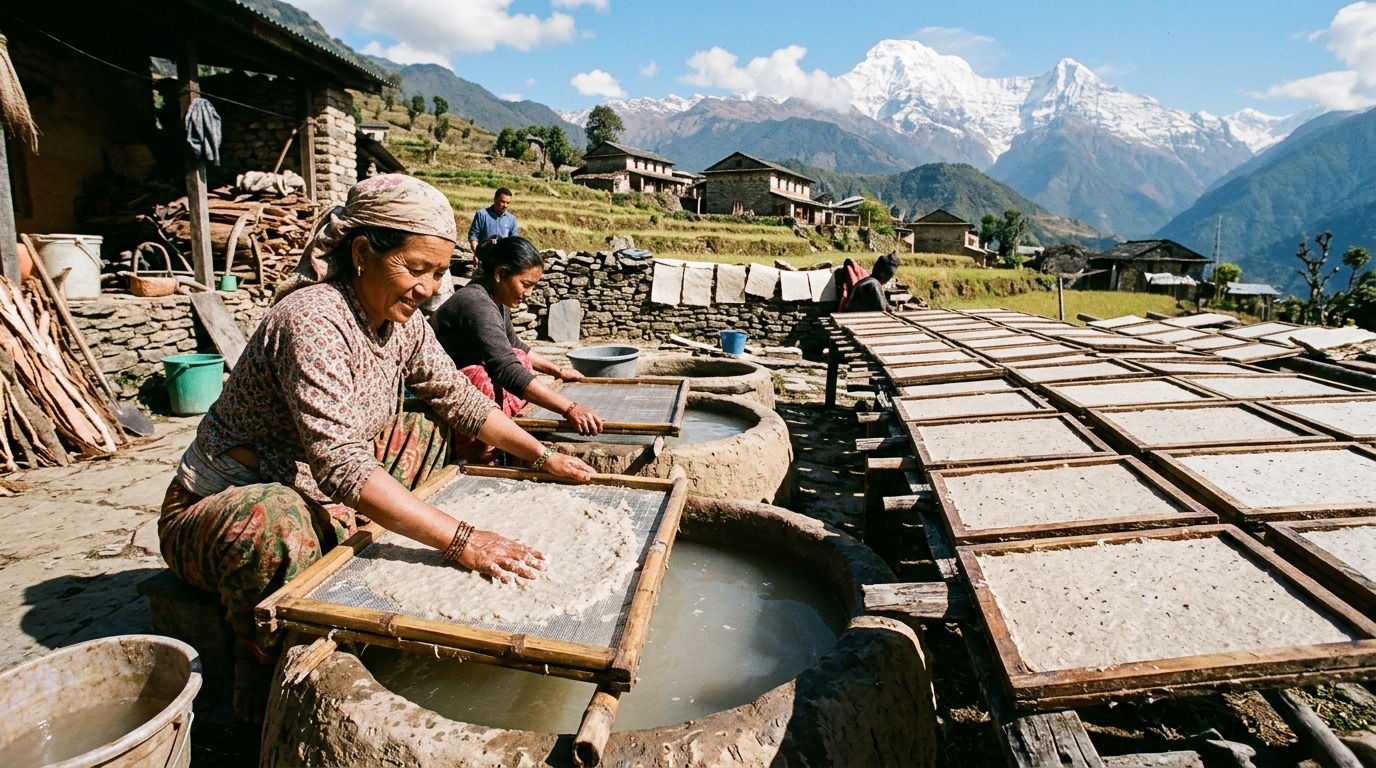
Lokta paper is made from the inner bark of a Daphne shrub that grows wild above 2,000m in the Himalayan hills. It has been made in Nepal for over a thousand years - historically used for royal decrees and religious manuscripts, because unlike wood-pulp paper, it resists insects and doesn't easily tear or rot. Today it's the paper behind most of the notebooks, wrapping paper and stationery sold as "eco-friendly Nepali paper," and the industry directly supports rural hill communities where the bark is harvested under permit, plus urban workshops in Kathmandu and Bhaktapur where it's processed into finished sheets.
A hands-on session, usually 2 to 2.5 hours, takes you through pulling wet pulp onto a mesh frame, setting it to dry, and binding your own simple notebook from the finished sheets - often finished with a small hand-stamped design. Bhaktapur has several working paper factories open to visitors, some combined with the pottery experience above since both crafts happen within walking distance of each other in the same heritage city. Because the whole industry runs on fair-trade principles and rural cooperative sourcing, this is also one of the more directly community-supporting experiences on this list - you're paying artisans and paper-makers, not intermediaries.
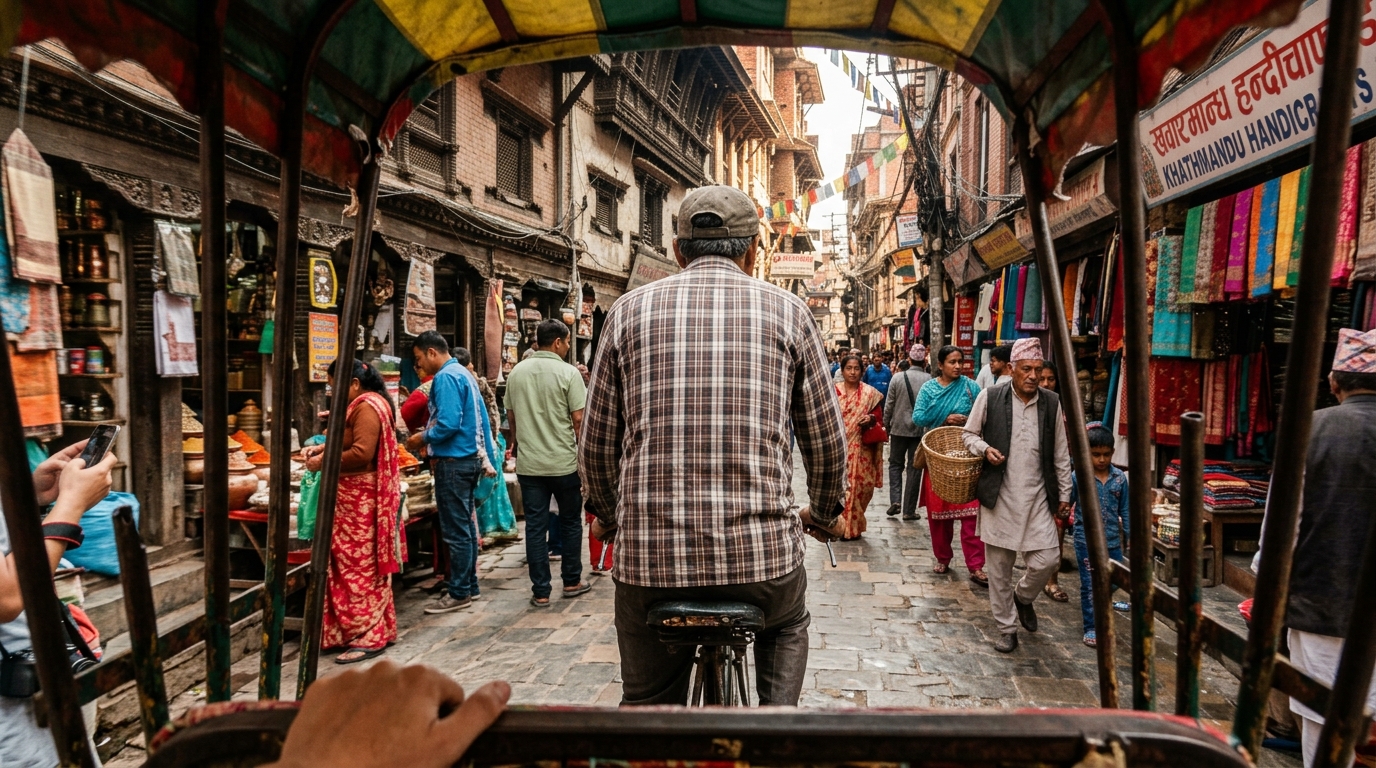
A cycle rickshaw seat puts you at street level, moving slowly enough to actually see the city rather than pass through it - which is the entire appeal, since Kathmandu's old town is built at a scale designed for feet and bicycles, not cars. The standard route runs from Thamel through Ason Bazaar (spice stalls, vegetable sellers, the oldest market square in the city), on to Indra Chowk with its glass bead and fabric shops, and finishing at Kathmandu Durbar Square - roughly 3 to 4 hours including stops to get out and walk through temples or markets on foot.
Rickshaw fares are negotiated rather than fixed in most cases, and typically land in the NPR 1,000-3,000 range (about $8-25) per rickshaw, which usually seats two. Drivers who've worked the old city for years often double as informal guides, pointing out temples, shrines and the history of the squares you pass through - though for a guaranteed English-speaking commentary, book a rickshaw tour through an operator rather than flagging one down independently. Evening rides through Thamel and Ason have their own character, with the market lit up and quieter foot traffic than during the day.
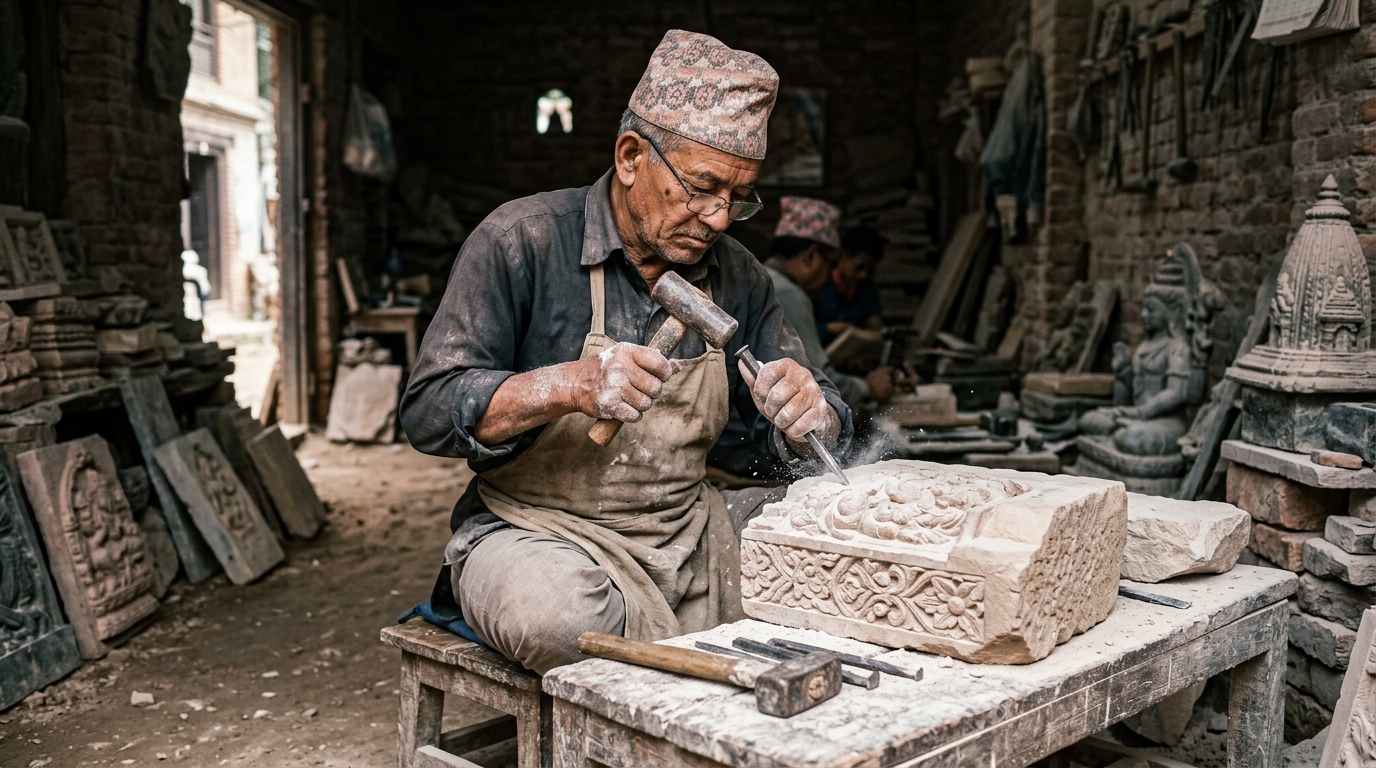
Every carved stone deity, water spout and temple base in the Kathmandu Valley - and there are thousands of them - was shaped by hand with a hammer and chisel, using techniques passed down within specific artisan families for generations. Patan remains the centre of this craft, and its Durbar Square is essentially an open-air museum of what a lifetime of stone carving produces.
A typical workshop runs about 3 hours: an introduction to the history and religious symbolism behind traditional carving motifs, time watching an artisan at work on an active commission, then a guided attempt at basic technique on your own small piece under close supervision. Pricing sits around $50-55 per person, usually including transport, lunch and all materials, with groups capped small (around 4-5 people) so the artisan can actually correct your technique rather than just demonstrate from a distance. It pairs naturally with a walking tour of Patan Durbar Square itself - Krishna Mandir, the Golden Temple, and the carved stone spouts scattered through the old city's back lanes make far more sense once you've spent an hour trying the technique yourself.
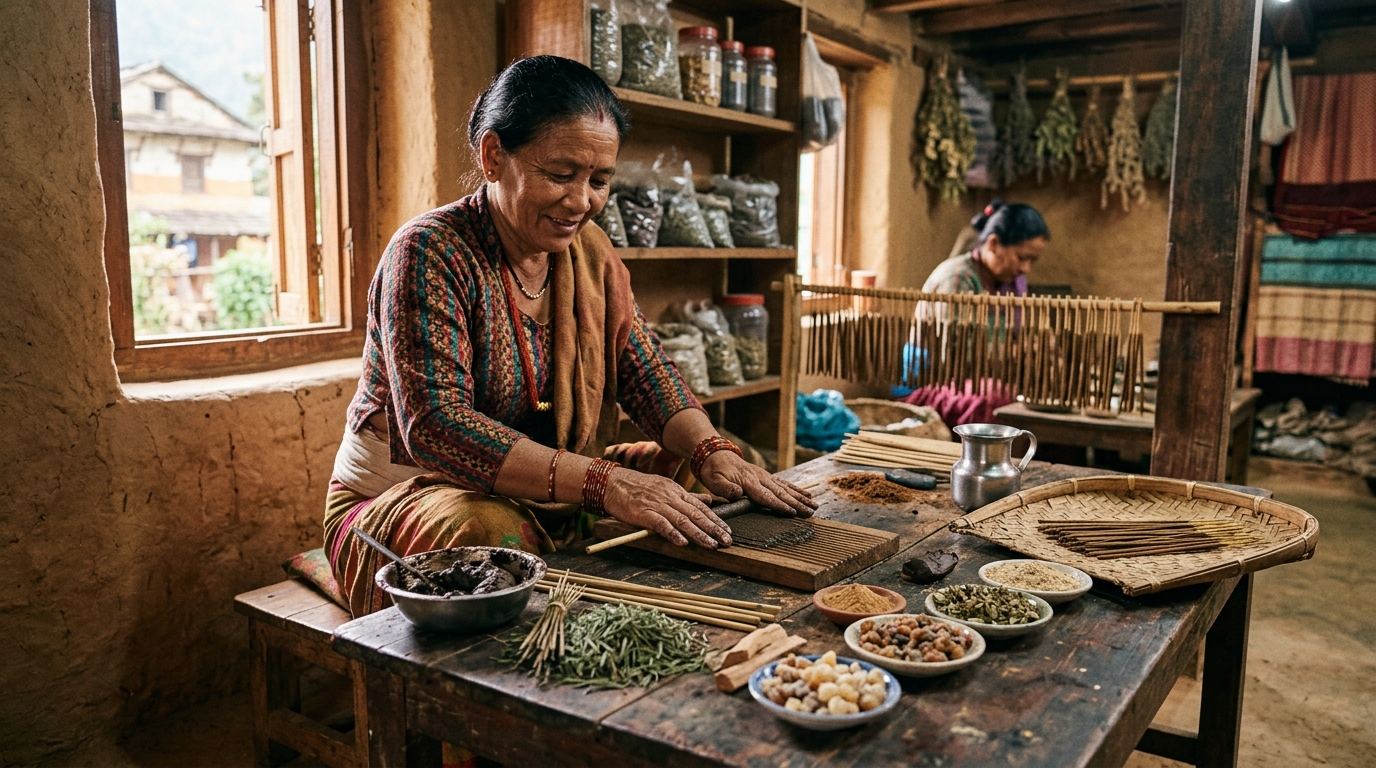
Nepali rope incense is made from ground cedarwood, sandalwood, juniper, cinnamon, cardamom and cloves, bound with resins like frankincense and myrrh and often medicinal Himalayan herbs such as jatamansi and ashwagandha. The dry mixture is packed into a strip of handmade Lokta paper - the same paper covered above - and twisted by hand into a rope that holds its shape without any glue. It is, by tradition, mostly women's work, and the highest quality incense in Nepal is still made this way rather than machine-pressed.
Standalone incense-making workshops are less commonly advertised on their own than as part of a broader traditional crafts session - several operators pair it with leaf-plate making (duna and tapari, the biodegradable plates used at festivals) and hand-twisted cotton wick making, since all three crafts sit within the same everyday ritual and household tradition. Expect a short, hands-on session of an hour or so, usually as an add-on to a longer cultural workshop day rather than a half-day booking in its own right - ask specifically for it when arranging a Bhaktapur or Kathmandu artisan day and most local operators can build it in.
These ten experiences cluster geographically, which makes combining them straightforward rather than a logistics headache:
A Bhaktapur craft day naturally combines pottery, Lokta paper making, and often a Thangka school visit, since all three are practiced within the same walkable heritage core. Budget a full day, including the Durbar Square heritage walk between workshops.
A Kathmandu old-city day combines a rickshaw ride, a hidden courtyards walk, and a cooking class comfortably, since Thamel, Ason, Indra Chowk and Durbar Square all sit within the same compact old town.
A Patan artisan day pairs stone carving with singing bowl workshops and the Durbar Square walk, since Patan is the valley's traditional centre for both metalwork and stone carving.
Khukuri forging and incense making are the two most worth booking as standalone half-days, since both benefit from unhurried time with a single artisan rather than being squeezed between other stops.
See our Kathmandu Valley guide and Bhaktapur City guide for how to structure these alongside the main heritage sites, or ask us to build a custom cultural experience itinerary around exactly the crafts you want to try.
What is the best hands-on cultural experience in Kathmandu?
It depends on your interests. The khukuri knife-making workshop and Thangka painting class are the most requested because guests leave with something they made themselves. For a lower-cost, more spontaneous experience, the Bhaktapur pottery wheel and a rickshaw ride through the old city are hard to beat. Cooking classes are the easiest to combine with any itinerary since they run daily in Thamel.
How much do these experiences cost?
Prices in Kathmandu range from under $2 for a few minutes on a Bhaktapur pottery wheel to around $70-75 for a guided Thangka painting or khukuri forging workshop with hotel transfers included. Most fall in the $20-55 range for a 2 to 4 hour guided session with an English-speaking instructor.
Can these experiences be combined into one day?
Yes, several combine naturally. A Bhaktapur day can include the pottery wheel, a stop at a Thangka school, and Lokta paper making, since all three crafts are practiced within the same heritage city. In Kathmandu, a rickshaw ride, a hidden courtyards walk, and a cooking class fit comfortably into one day.
Do I need to book these in advance?
The casual, low-cost versions - a few minutes on the Bhaktapur pottery wheel, an independent walk through the hidden courtyards, flagging down a rickshaw - need no advance booking at all. The structured workshops (khukuri forging, Thangka painting, stone carving) work better booked a day or two ahead, since group sizes are kept deliberately small and the better artisans have limited daily capacity.
Tell us which crafts interest you, your travel dates, and group size. We'll build a day-by-day itinerary around the workshops that fit, with the right artisans booked in advance.

Getaway Nepal Adventure (P.) Ltd.
Thamel Kathmandu, Nepal
Tel: +977 98510 38 908





 TripAdvisor