Every country has moments that catch a first-time visitor off guard. Nepal has more of them than most, and they arrive faster and closer together than almost anywhere else in Asia. Within a single afternoon you can watch an open-air cremation from thirty metres away, eat a full meal with your bare right hand, get boxed in by a sacred cow standing calmly in the middle of rush-hour traffic, and lose electricity mid-sentence in a café. None of it is staged for tourists. It is simply how life runs here, and it runs that way regardless of who's watching.
This is what people mean when they talk about cultural shock in Nepal: not danger, and not something to brace against, but a string of moments where a belief you didn't know you held quietly gets rewritten. Death is not hidden away in Nepal the way it is in most Western cities. Personal space works differently. A goddess can be a nine-year-old girl. None of these things are wrong, they're just not what most visitors expect, and that gap between expectation and reality is exactly where the best travel memories tend to live.
We put together ten of the most genuine culture shock experiences a traveller can actually have in Nepal, mostly around Kathmandu, with honest context on what you'll see, why it happens, and how to be present for it respectfully rather than as a spectator with a camera. Treat this as a companion to our hands-on cultural experiences guide and our free walking tour of Kathmandu's local markets, both of which put you directly inside several of the moments described below.
1. Witnessing an Open-Air Cremation at Pashupatinath
2. Eating Dal Bhat With Your Hands
3. Meeting the Kumari, Nepal's Living Child Goddess
4. Sadhus: Ash-Smeared Holy Men in the Temple Courtyards
5. Kathmandu's Traffic, Horns and Power Cuts
6. Haggling in Asan Market and Thamel
7. Squeezing Onto a Local Microbus
8. Getting Pulled Into a Street Festival
9. Sacred Cows, Monkeys and Free-Roaming Animals
10. Dressing in Local Costume and Carrying a Doko Basket in a Hill Village
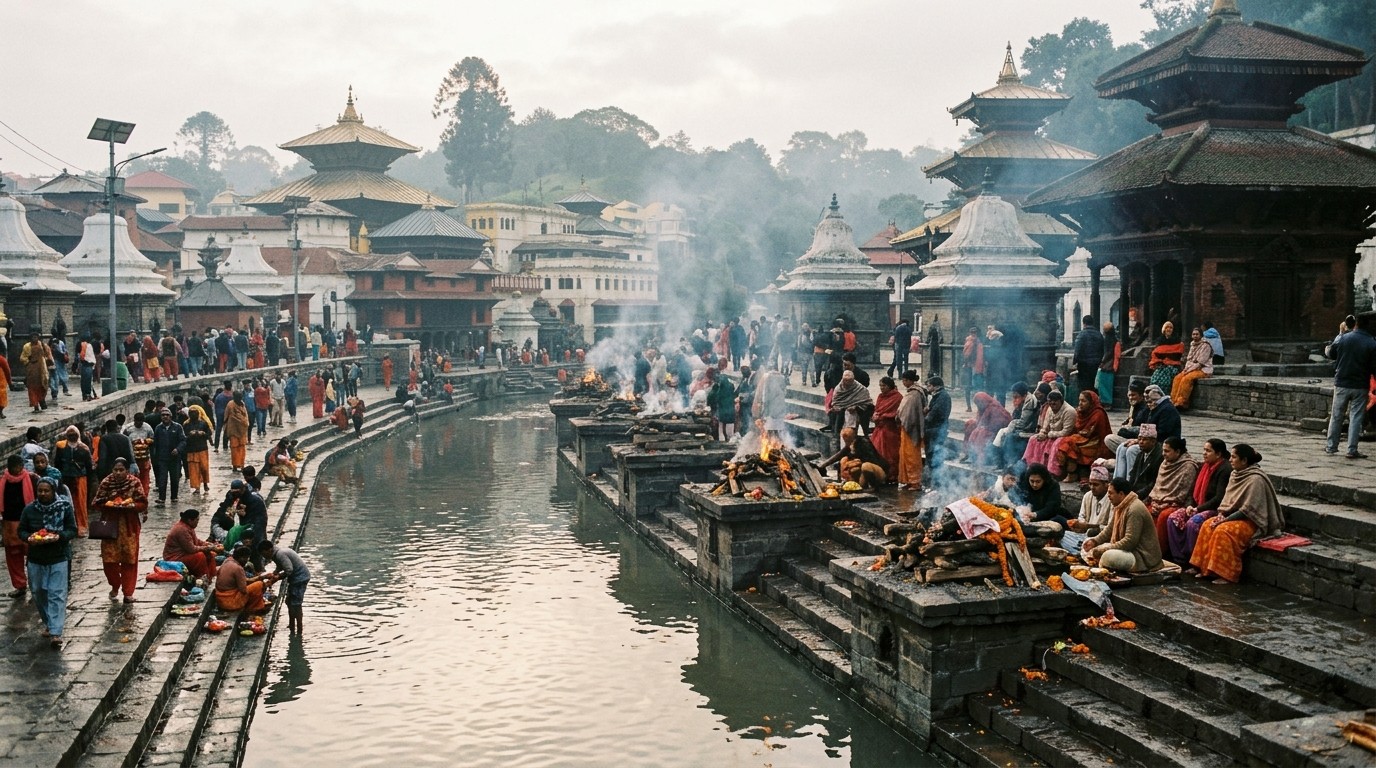
Pashupatinath, on the banks of the Bagmati River, is one of the holiest Hindu temples in the world, and it is also Kathmandu's main public cremation site. Hindu funeral rites here happen in the open, on stone platforms called ghats, in full view of anyone standing across the river. For most Western visitors this is the single largest cultural shock activity in Nepal, not because it's frightening, but because death is normally handled privately at home, and here it is handled in public, as an accepted part of daily life along a sacred river.
You watch from the eastern bank, a designated public area a short walk from where the ceremony takes place, so nothing about observing is intrusive by local standards. What tends to reorder a visitor's thinking is the ordinariness of it: mourners talking quietly, children playing nearby, monkeys moving along the rooftops, life continuing around a ritual most cultures keep hidden away. Go respectfully; keep your voice low, don't point a long lens at grieving families, and let a guide explain the sequence of the ritual rather than guessing at what you're seeing. It's usually paired with a look at the temple's resident sadhus, covered below.
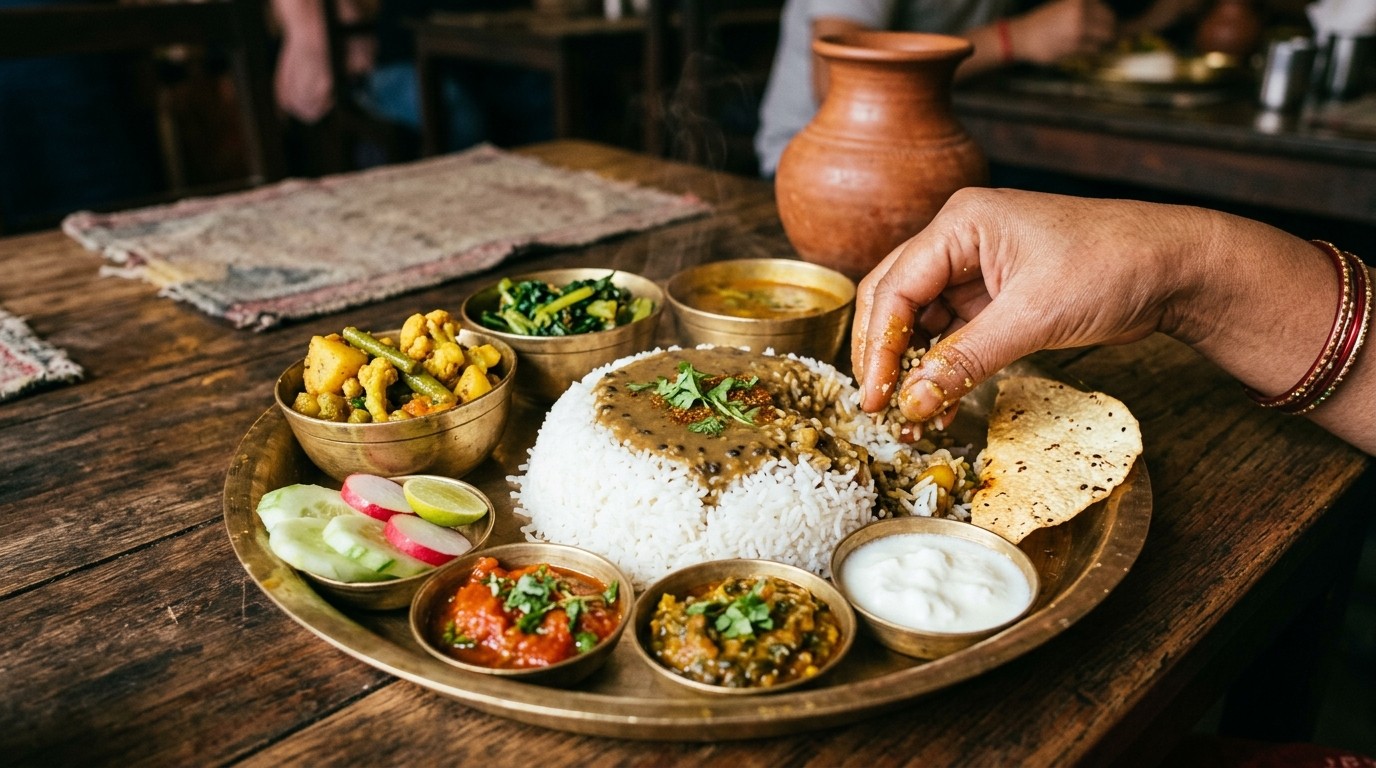
Dal bhat, rice with lentil soup, vegetable curry and pickle, is the meal most Nepalis eat twice a day, and in a home or a local eatery it's eaten with the right hand, not cutlery. The rice is mixed with dal and curry using the fingers, formed into a small ball, and eaten with the thumb. It's a genuinely different physical relationship with food than most visitors are used to, and the first attempt is usually messier and more self-conscious than expected.
There's real etiquette behind it, not just informality. Only the right hand touches food or is used to pass anything, since the left is reserved for washroom use. Nepalis will often hand you a spoon by default in touristy restaurants, so if you want the full experience, you may need to ask. Doing this at a local family's table, rather than a restaurant staged for visitors, is where it actually lands as a cultural shock activity worth having, since sharing a meal this way, on the floor, from a shared platter, is also a small act of trust that Nepali hosts extend easily and genuinely appreciate visitors trying.
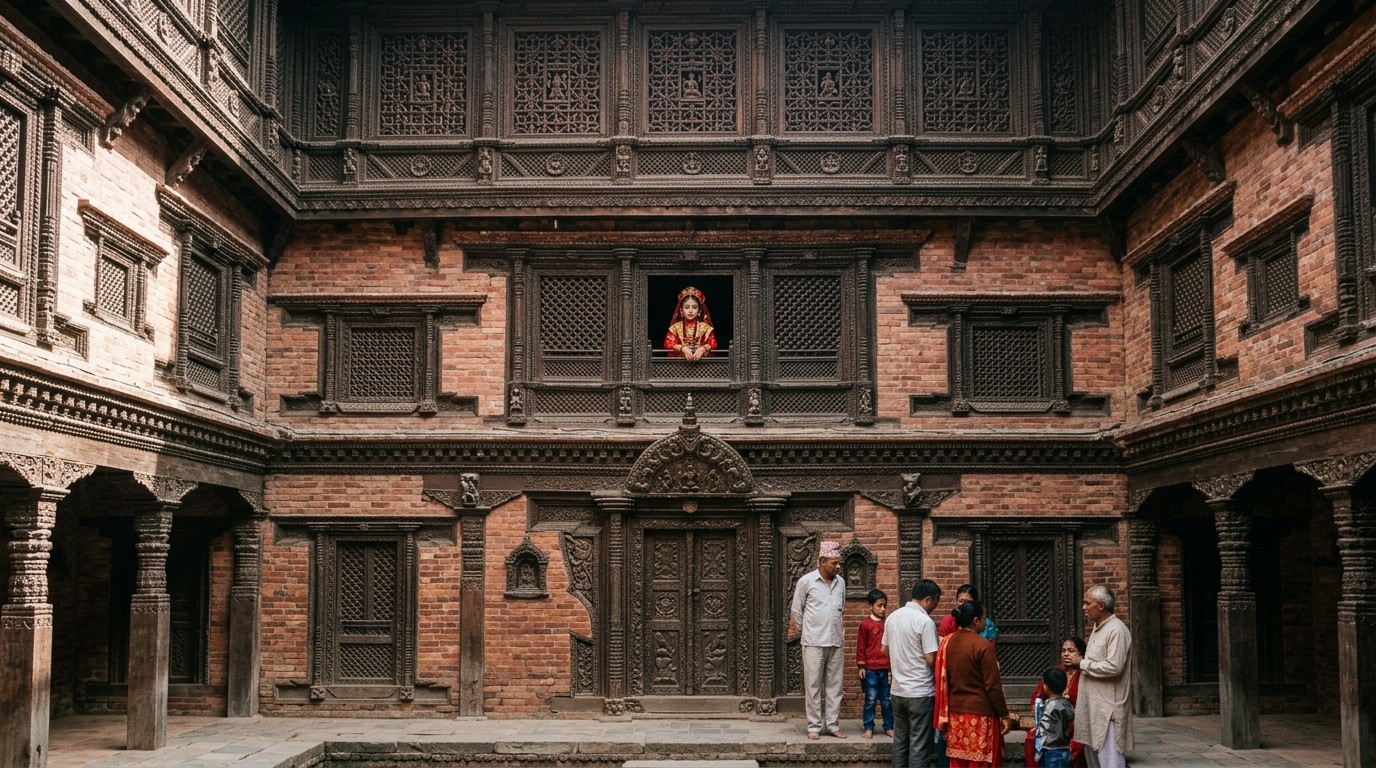
Inside Kathmandu Durbar Square stands the Kumari Ghar, home to the Kumari: a pre-pubescent girl, selected through a rigorous traditional process, who is worshipped as the living incarnation of the goddess Taleju until she reaches puberty, at which point a new Kumari is selected. It's one of the few living deity traditions left anywhere in the world, and encountering it in person, rather than reading about it, is genuinely disorienting for most visitors: a child, dressed in red and gold with a painted third eye, treated with the full formal reverence of a goddess.
Visitors gather in the Kumari Ghar's courtyard for a chance to see her appear briefly at an upper window, usually mid-morning to early afternoon; there's no fixed schedule and photography of her is not permitted, only of the building itself. She does not speak or wave. That stillness is, for many travellers, the actual shock: not the concept of a living goddess in the abstract, but standing in a stone courtyard watching a real child hold that role with complete composure.
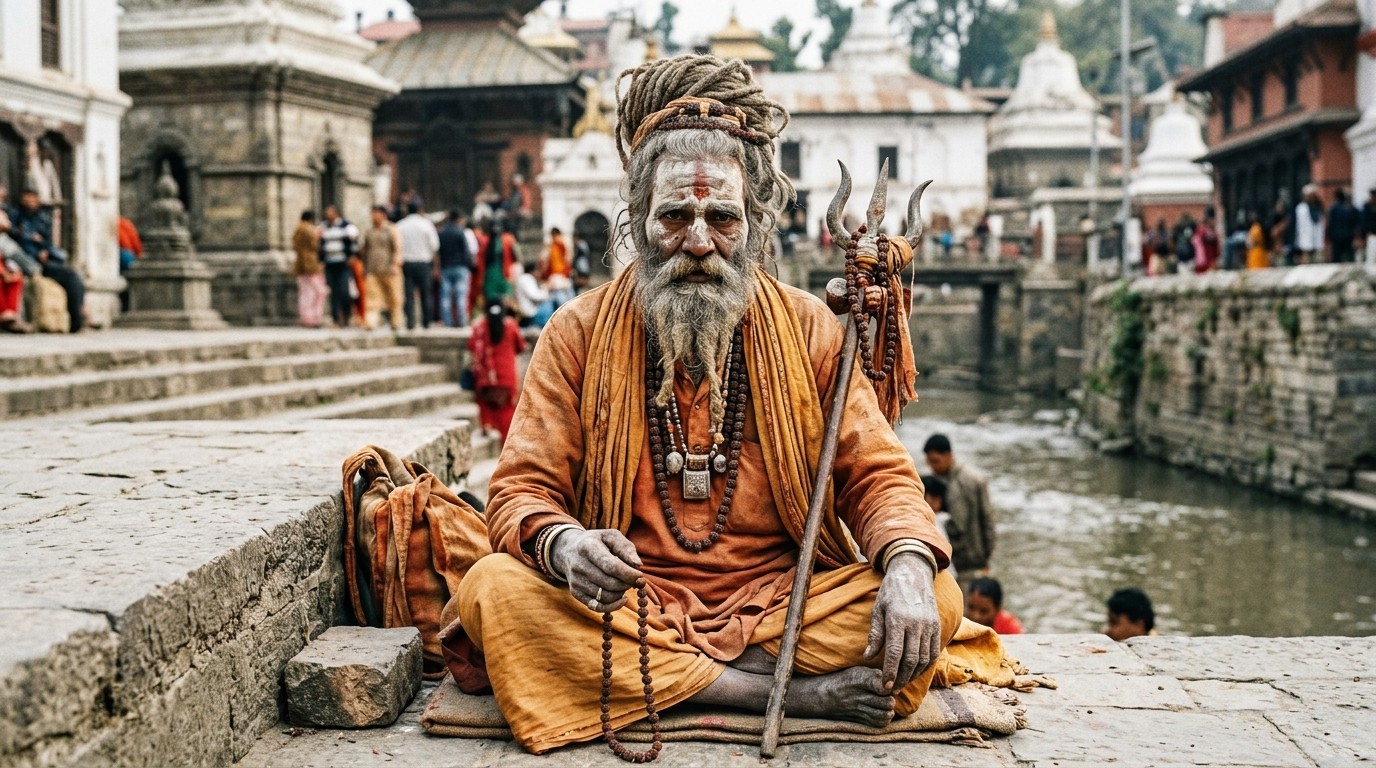
Sadhus are Hindu ascetics who have renounced ordinary life entirely, homes, possessions, family, in pursuit of spiritual liberation. You'll find them, especially around Pashupatinath, with matted dreadlocked hair, faces and bodies streaked in ash, wrapped in saffron cloth, sitting in meditation or conversation near the temple. Some are genuine renunciants who have lived this way for decades; a smaller number in heavily touristed spots pose for photos in exchange for a tip, which is worth knowing before you assume every sadhu you photograph is purely spiritual and not also, partly, working.
The shock here is less about appearance and more about what it represents: an entire, socially respected life path built around deliberately walking away from everything most cultures treat as the point of living. If you want a photo, ask first and expect to offer a small donation (roughly NPR 50-100) in return; it's a normal, non-awkward transaction in this context, not a breach of anything sacred.
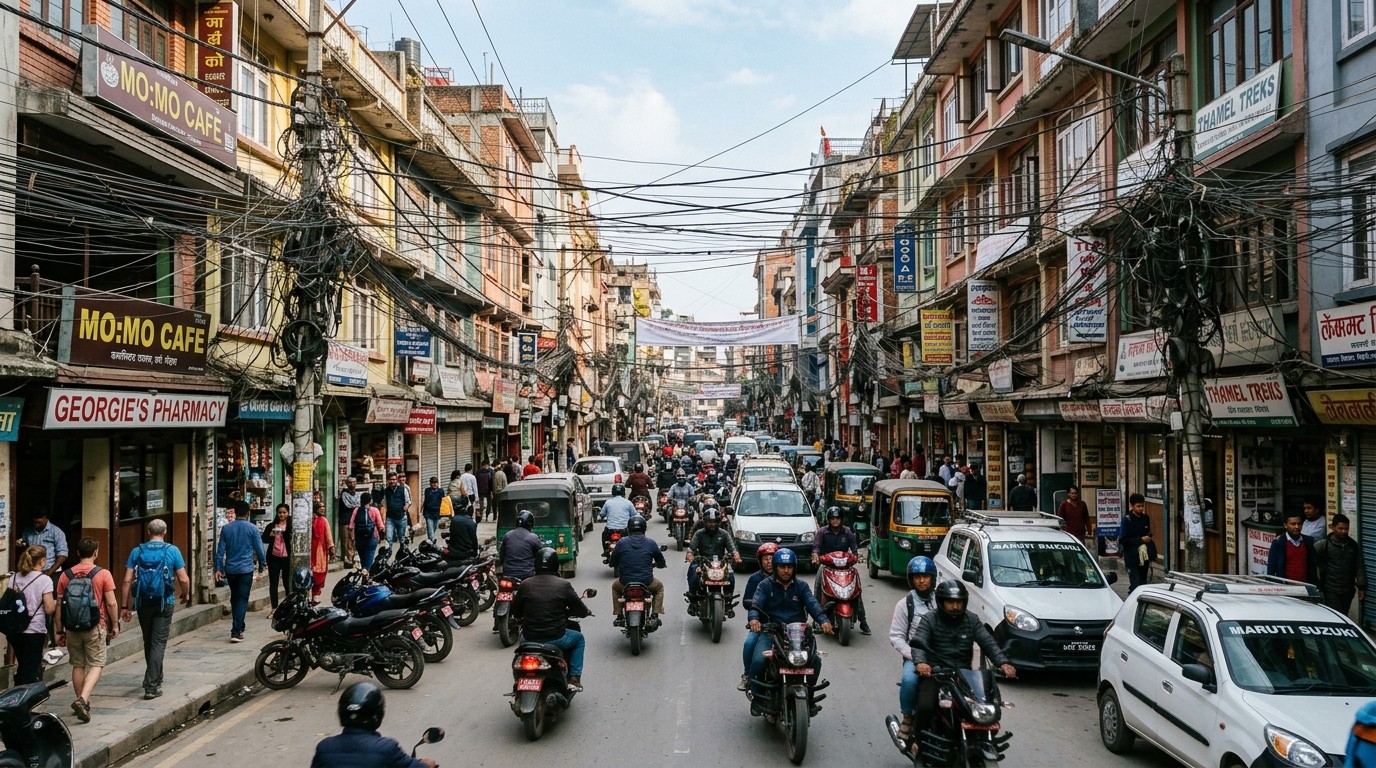
Nothing prepares first-time visitors for Kathmandu traffic quite as effectively as actually being in it. Lane markings are treated as suggestions, horns are used constantly as a form of communication rather than aggression, and motorbikes, cars, cows, and pedestrians all negotiate the same narrow street simultaneously, somehow, without the constant collisions you'd expect watching it from the sidewalk. Overhead, tangled power lines loop across buildings in dense knots that look, to most Western eyes, actively dangerous.
Power cuts, locally called load-shedding, used to be a daily, scheduled event in Kathmandu; they're far less frequent now but still happen unannounced, mid-meal, mid-shower, mid-conversation, and the local reaction is usually a shrug rather than alarm. Both of these, the traffic and the power, are good examples of a broader cultural shock pattern in Nepal: systems that look chaotic from outside function through informal, adaptive local logic that mostly just works, even when it looks like it shouldn't.
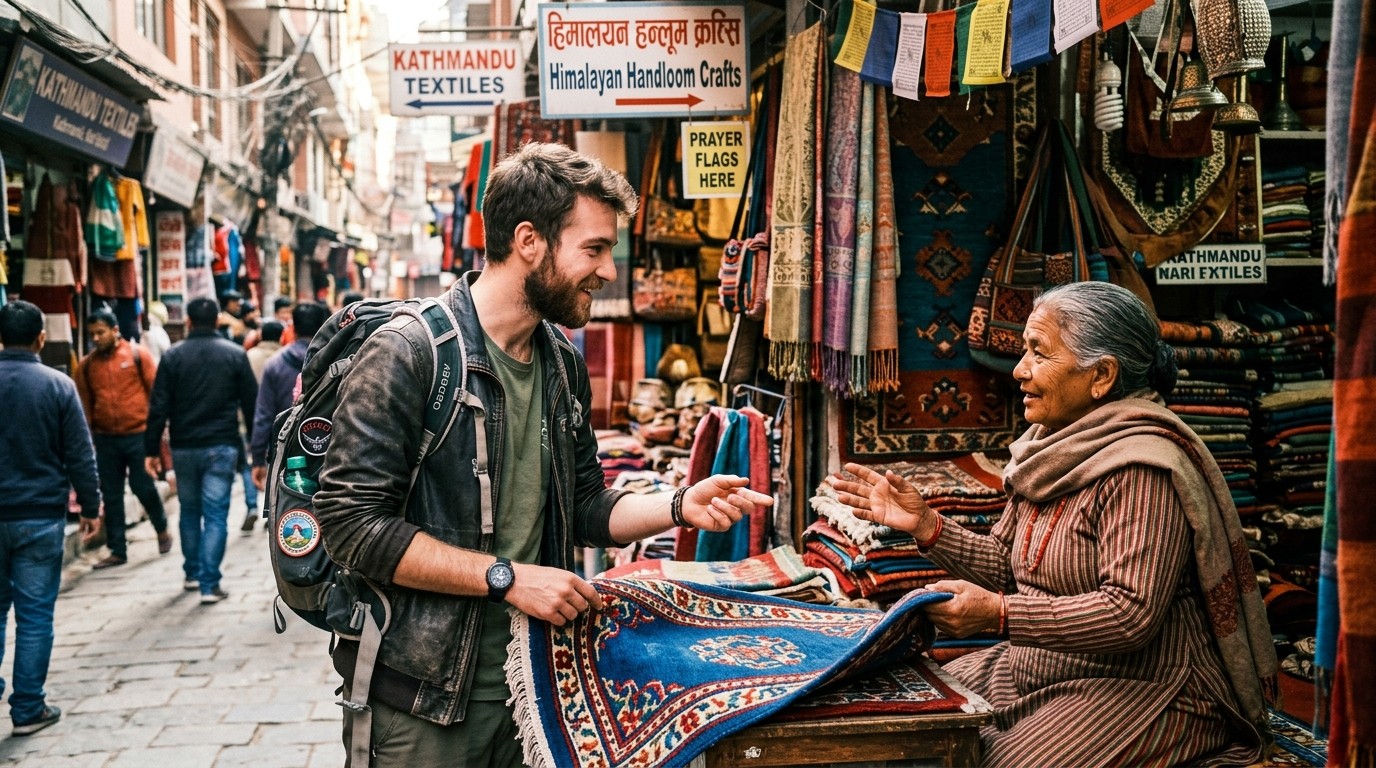
In most fixed-price shopping cultures, negotiating over a price feels confrontational. In Thamel and Asan Market, it's simply how buying works, expected by both sides, and skipping it usually means overpaying rather than being polite. The first sticker price quoted to a foreigner is almost always a starting offer, not a final one, and a counter-offer is read as normal participation, not rudeness.
The shock, for many visitors, isn't the haggling itself but how quickly it stops feeling uncomfortable: what starts as an anxious first attempt over a pashmina scarf usually becomes, within a day or two, something closer to a genuinely enjoyable social exchange, often ending in both sides smiling regardless of who "won." The one place this logic flips is taxis, where foreigners are almost always quoted above the local rate regardless of negotiation skill; agree on a fare before getting in, or ask your hotel for a fair local benchmark first.
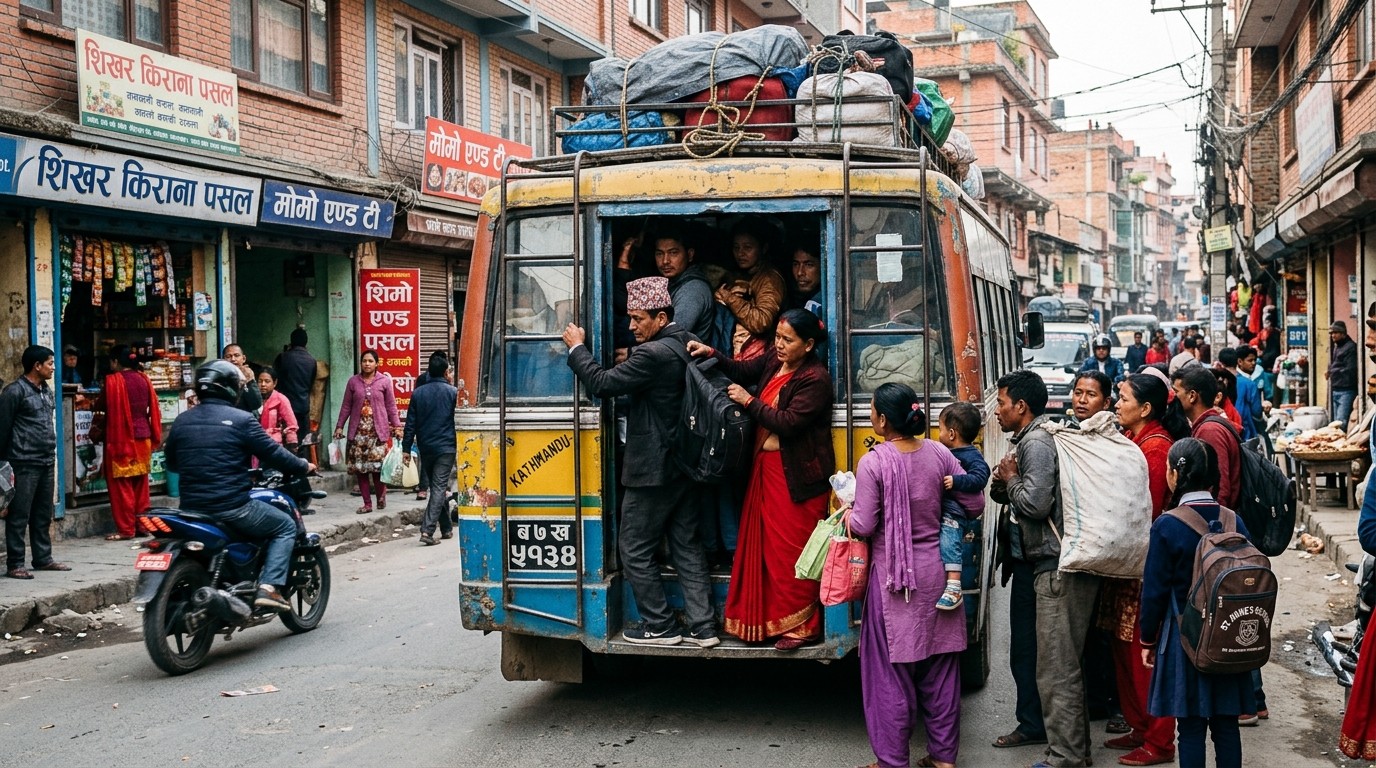
Kathmandu's local microbuses, small vans that run fixed routes and stop wherever someone flags them down, are the cheapest and most crowded way to move around the city, and riding one at least once is a genuine local-life experience most tour itineraries skip entirely. A conductor hangs out the open sliding door calling the destination in a fast, clipped shorthand, passengers squeeze in well past what looks like capacity, and fares, usually under NPR 40 (about 30 cents) for a short hop, are paid hand to hand and passed forward through the crowd.
It is, by design, an intimate way to travel: shoulder to shoulder with commuters going about an ordinary day, with foreigners as a rare and mildly curious sight rather than a target for anything. It won't be comfortable and it isn't meant to be scenic, which is exactly why it lands as a genuine cultural shock activity rather than a staged one; you're using the same system locals use every day, not a version built around visitors.
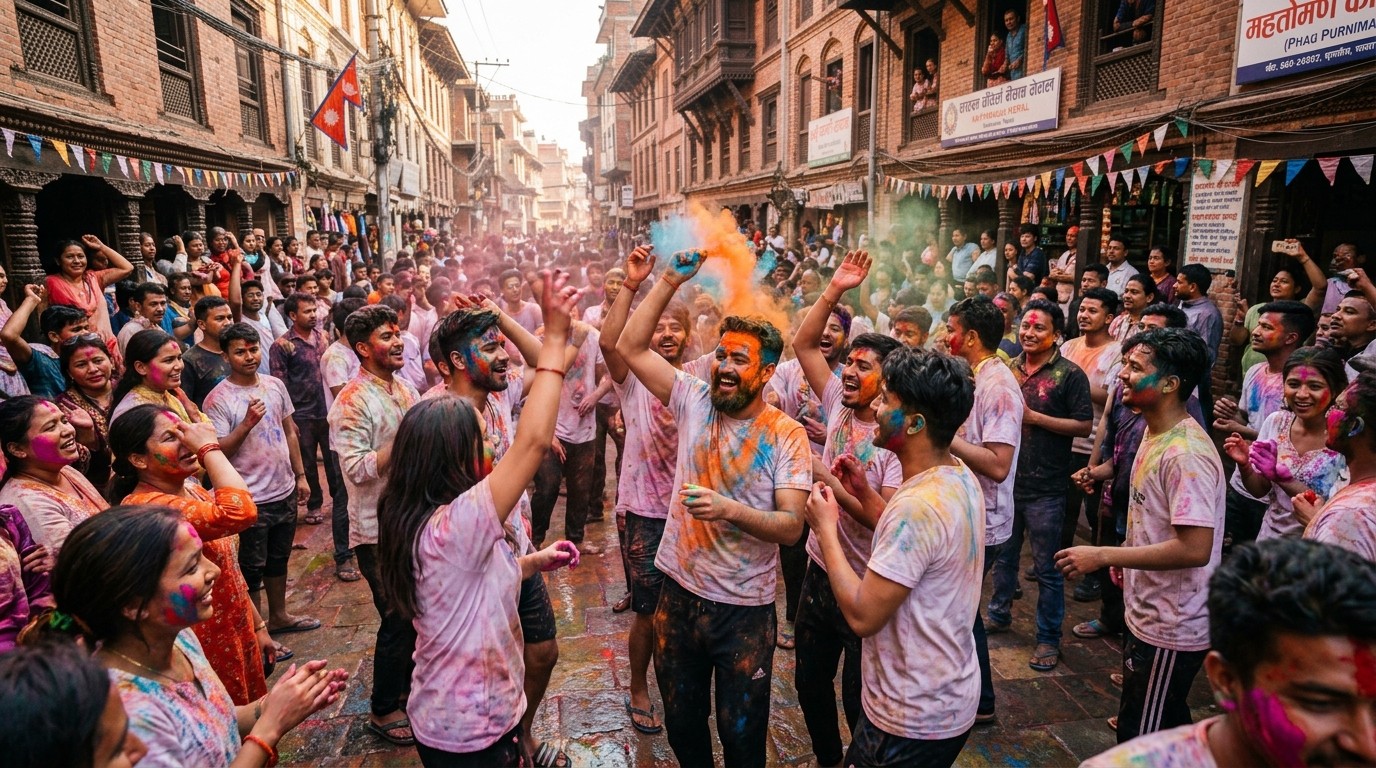
Nepal runs on a festival calendar dense enough that visiting almost any time of year, there's a real chance of stumbling into one mid-swing. Holi turns entire streets into a coloured-powder free-for-all each spring; Dashain, the country's longest festival, empties the cities as families travel home; Indra Jatra fills Kathmandu Durbar Square with masked dancers and chariot processions; Gai Jatra sends a procession of cows and cow-costumed children through the streets to guide the souls of the recently deceased. None of these are performances staged for tourists, and if your visit coincides with one, you'll likely be swept in whether you planned for it or not.
The shock isn't any single festival, it's the sheer frequency and intensity: a quiet residential street can become a wall of colour, drumming and crowd noise within minutes, then return to normal just as fast. Ask your guide or hotel what's happening locally during your dates; festival timing shifts yearly on the lunar calendar, and being in Kathmandu during Holi or Indra Jatra, even unplanned, tends to become the single most talked-about part of a trip.
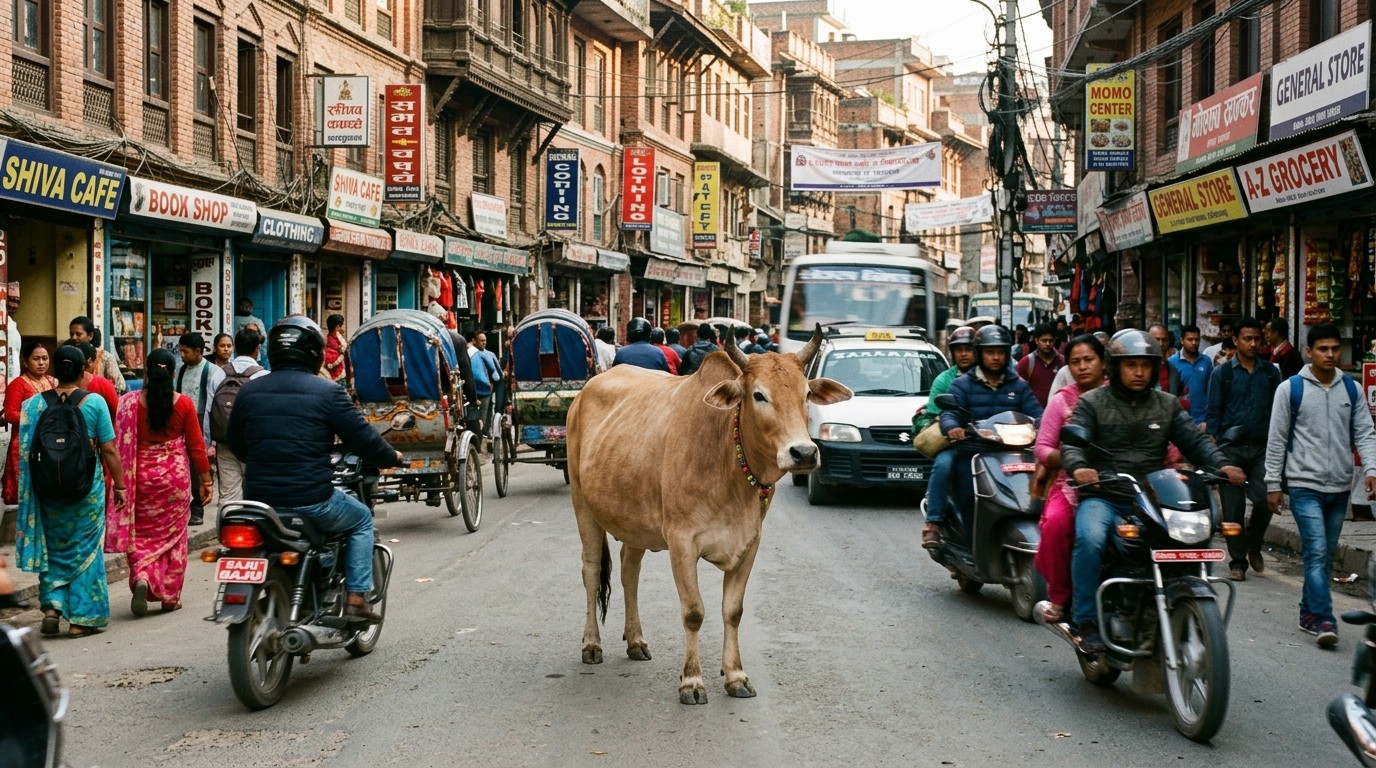
The cow is sacred in Hindu culture and, as Nepal's national animal, protected by law; the practical result is cows standing, sitting, or wandering wherever they please, including the middle of moving traffic, with drivers simply routing around them without complaint. It's one of the more visually striking cultural shock moments in Kathmandu: an animal treated as a full, unhurried right-of-way participant in a traffic system that otherwise looks like barely-controlled chaos.
At Swayambhunath, the "Monkey Temple," hundreds of rhesus macaques treat the hilltop as home turf, and they are neither shy nor entirely harmless; keep food out of sight, since a monkey stealing a snack straight out of a visitor's hand is a near-daily occurrence there. Street dogs, meanwhile, are a constant, mostly docile presence across the city, generally left alone rather than adopted or removed, another small sign of how differently animal-human boundaries are drawn here compared to most Western cities.
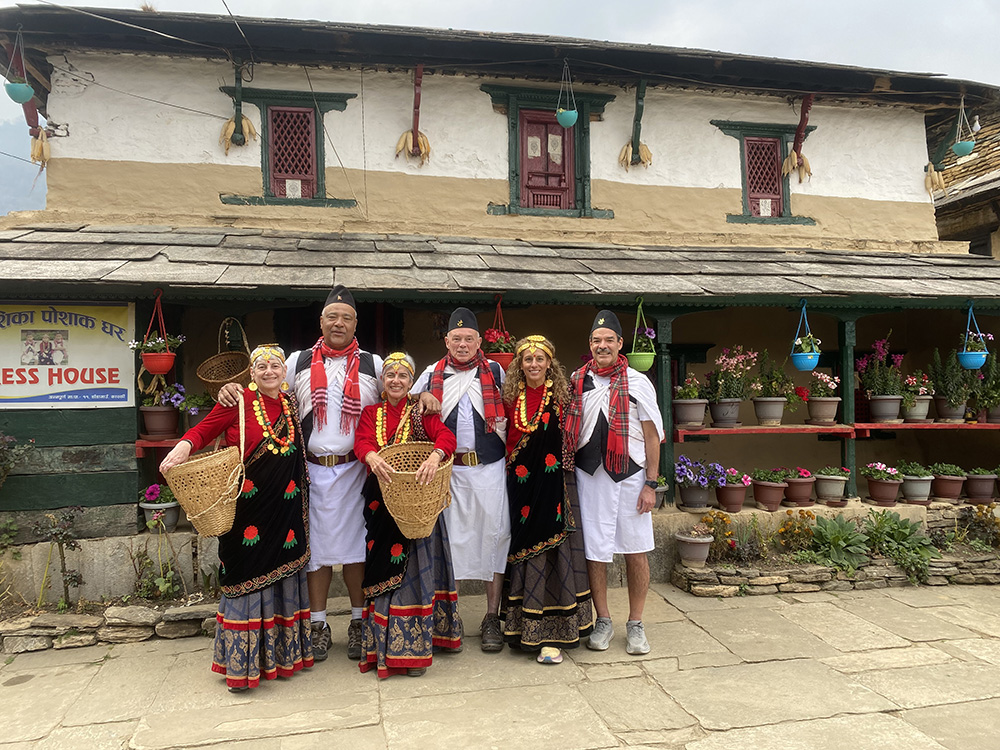
Not every cultural shock in Nepal is unsettling; some are simply humbling. In hill villages around places like Bandipur, Ghandruk and Sirubari, community-based tourism programs invite visitors to try on traditional dress, weave marigold garlands, and carry a doko, the large conical bamboo basket Nepali hill farmers use to haul everything from firewood to produce, supported by a namlo strap across the forehead rather than the shoulders. It looks simple until you actually lift a loaded basket this way; most visitors are surprised by how much core strength and balance it demands, and by how casually local grandmothers still carry them daily up steep stone stairways.
The shock, in this case, is entirely physical and entirely humbling: a small, genuine window into how demanding rural Nepali daily life actually is, usually followed by tea, a shared meal, and a warmth from the host family that has nothing performative about it. These village stays are also some of the most directly community-supporting experiences on this list, since the homestay fee and any craft purchases go straight to the family hosting you, not an intermediary.
Cultural shock is not something to minimise, but it is something to have well rather than carelessly. A few principles carry across all ten of these:
Let a local guide set the pace at sacred sites. Pashupatinath, the Kumari Ghar, and any festival in progress all have real etiquette that isn't written on a sign anywhere; a guide who grew up with these customs will tell you where to stand, when to lower your camera, and what's actually happening, rather than leaving you to guess.
Ask before you photograph people. Sadhus, cremation mourners, and the Kumari all deserve the same basic courtesy: ask, or in the Kumari's case, follow the posted rule, rather than assuming a public setting means an open subject.
Say yes to the small, ordinary invitations. A microbus ride, a dal bhat meal eaten by hand at someone's table, a haggling conversation that turns into a chat about your trip, these cost little and open more of Nepal than any monument will on its own.
See our free walking tour of Kathmandu's local markets and hands-on cultural experiences guide for structured ways into several of these moments, or ask us to build a custom itinerary that balances heritage sites with genuine local-life encounters like the ones above.
What is the biggest cultural shock for tourists visiting Nepal?
For most first-time visitors it's Pashupatinath: watching an open-air Hindu cremation happen in public, a short walk from where tourists are standing. Close behind are Kathmandu's traffic and power cuts, and the sight of sacred cows walking freely through moving traffic.
Is it disrespectful to watch a cremation ceremony in Nepal?
No, watching from the designated public viewing areas across the river at Pashupatinath is an accepted part of visiting the temple and is not considered disrespectful. What matters is behaviour: stay on the tourist side of the river, keep your voice down, do not photograph grieving families up close, and follow your guide's lead.
Do I need a guide to experience these cultural shock moments safely and respectfully?
Not for all of them; haggling in a market or watching Boudhanath at sunrise works fine independently. For Pashupatinath, meeting the Kumari, or attending a festival, a local guide adds real value by explaining etiquette in the moment and giving context you would otherwise miss entirely.
When is Nepal's festival season, if I want a chance at experience #8?
Dashain and Tihar, the two biggest festivals, usually fall in September and October, with exact dates shifting yearly on the lunar calendar. Holi falls in March. Indra Jatra and Gai Jatra both happen around August-September in Kathmandu specifically.
Tell us your travel dates and what you're hoping to see and understand, not just visit. We'll build an itinerary that pairs the major heritage sites with genuine local-life moments like the ones above.

Getaway Nepal Adventure (P.) Ltd.
Thamel Kathmandu, Nepal
Tel: +977 98510 38 908





 TripAdvisor